

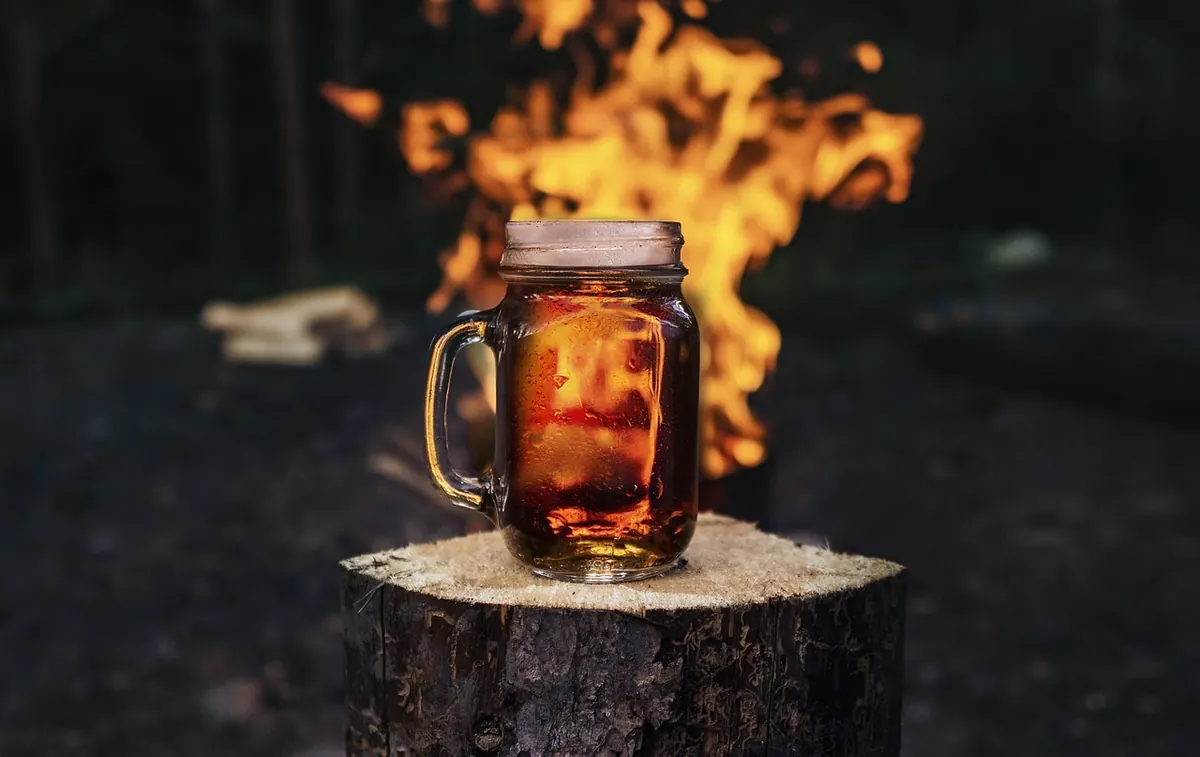
Cold brew tea is the quietest way to make tea. You put leaves in a jar of cold water, close the lid, and walk away. Eight hours later — or twelve, depending on the leaf — you have something clear, sweet and gently aromatic that tastes nothing like the forgotten mug of cold tea on your desk.
It helps to separate two ideas. Iced tea is usually hot tea that has been chilled; its character was fixed in the first three minutes of steeping. Cold brew is extraction that happens entirely in cold water, slowly, over hours. Heat is what makes tea brisk and bracing. Cold water coaxes out a different balance, and the margin for error is far wider.
Why Cold Brew Tastes Softer
Hot water is an impatient solvent. In a few minutes it pulls out the tannins, bitter compounds and volatile aromatics that give black tea its grip and green tea its edge. Cold water works more slowly, so the astringent, drying parts of the cup build up gradually while the sweeter, rounder character comes forward first.
The trade-off is intensity. Cold brew rarely has the fragrance of a freshly poured hot cup, and delicate high-grown teas can taste thin. What you gain is forgiveness: a cold brew that sits two hours longer than planned is usually still pleasant, where a hot steep left that long would be undrinkable.
Start With a Ratio You Can Remember
One teaspoon of loose leaf per 240 ml (8 oz) of cold water is the reference point. By weight that is roughly 1 gram per 100 ml, close to a standard hot-tea ratio. The difference is time, not quantity. Two things shift the number:
- Leaf size. Whole leaf unfolds slowly and needs the full steep. Fannings and CTC — the small granular bits in most standard tea bags — release fast and can turn harsh, so use slightly less or strain early.
- Delivery. For a concentrate to pour over ice or mix with milk, use 2 to 3 teaspoons per 240 ml and dilute 1:1 when serving. A concentrate takes up less fridge space and keeps better.
Timing by Tea Type
Time is where cold brew rewards attention. Start at the short end, taste, then add hours rather than guessing.
Black and oolong
Eight to twelve hours in the fridge. Whole-leaf Assams and oolongs want the full twelve; broken-leaf blends are ready at eight. Expect malt, dried fruit and a clean finish with very little of the tannic bite a hot brew delivers.
Green and white
Four to six hours, and four is often enough for delicate Japanese greens such as gyokuro. Push green tea past six hours and it turns grassy, then bitter, and the liquor dulls from bright to olive. White teas sit comfortably at six to eight hours.
Herbal and tisanes
Eight to twelve hours for leaves and flowers, twelve to twenty-four for roots, bark and spices such as ginger, cinnamon and licorice, which give up their flavour stubbornly. Hibiscus is the exception: tart and ready in four to six hours, aggressively sour beyond that. Chamomile is best at four to six, and goes cloudy and slightly bitter if left longer. Rooibos can steep overnight without complaint.
Step-by-Step: Your First Batch
- Measure 1 teaspoon of loose leaf, or one tea bag, per 240 ml of water into a clean jar. Loose leaf can go in freely if you plan to strain, or into a fine mesh bag for easy removal.
- Add cold, filtered water. Cold mutes everything, so chlorine and hard water show up more clearly here than in a hot cup.
- Cover and refrigerate. Stick a note on the lid with the time you started.
- Taste at the short end of the range. The target is sweet, clear and pleasant on its own — not as strong as possible.
- Strain through a fine mesh sieve, then through a paper or coffee filter if you want a truly clean cup. Don't press hard on the leaves; squeezing adds bitterness.
- Serve over ice, or return the strained tea to the fridge in a covered jar.
When It Goes Wrong
- Too bitter or drying: shorten the steep, use less leaf, or switch from fannings to whole leaf.
- Weak and watery: add leaf rather than hours. Past roughly fourteen hours, extra time mostly adds bitterness, not flavour.
- Cloudy: usually fine particles. Strain again through paper. Some teas, chamomile and sencha among them, go naturally hazy.
- Flat and dull: often the water. A strip of citrus peel or a small pinch of salt in the jar can sharpen a bland batch.
- Unpleasantly sour after two days: discard it. Cold brew left at room temperature for hours is best poured out too.
Serving, Storing, and a Word on Caffeine
Cold brew makes an excellent base for drinks. Lemon and honey over ice is the simplest. Sparkling water with a grapefruit peel, mint and cucumber in a green tea brew, or tonic and a slice of orange over a strong black tea concentrate all work well. For a chai-style concentrate, add crushed cardamom, ginger and cinnamon to black tea in the jar and steep twelve hours, then mix with milk and a little sweetener.
Keep strained cold brew covered in the fridge and drink it within three or four days. Once you add fruit or sweetener, treat it as a fresh drink and finish it within a day or two. And remember that cold water still extracts caffeine, just more slowly: a twelve-hour black tea cold brew is not a light beverage. If you are sensitive, use fewer leaves, a shorter steep, or decaf.
One caution worth repeating for herbal blends: if you are pregnant, nursing, or taking medication, check with a healthcare professional before making a strong herbal tea a daily habit, since some herbs are not neutral.
Keep a Jar in the Fridge
The easiest way to learn cold brew is to start one jar and adjust from there. A one-litre jar with four teaspoons of leaf, filled at night with cold water, is ready to strain the next evening. Write the tea name and the time on the lid, taste at four hours, and note when it hit the point you liked. Three or four batches in, you will have your own ratios — and a permanent pitcher of something better than anything you can buy bottled.
Photo: JoshuaWoroniecki / Pixabay