

You bought decent green tea. You followed the instructions on the tin. And the cup still came out harsh, drying, with a bitterness that settles at the back of your tongue and stays there. Before you blame the tea, know this: green tea is the least forgiving style in the cupboard. It responds to heat, time, and quantity more sharply than black tea or oolong ever will. The three dials that matter most are also the three almost nobody adjusts. All of them are easy to turn.
1. Water That's Too Hot
This is the single biggest cause of bitter green tea. Green leaves are young and tender, and the compounds that taste fresh and sweet when extracted gently turn sharp and astringent when they're hit with a rolling boil. Boiling water sits around 100°C (212°F). Most green teas want somewhere between 60°C and 85°C, which is a wide gap in practice.
You don't need a thermometer, though one helps at first. Boil your water, then let the kettle sit off the heat for three or four minutes to land near 80°C, or five to seven minutes for something closer to 70°C. Another trick: pour the just-boiled water into your empty cup or teapot first, let it warm the vessel, then move it onto the leaves. The short transfer drops the temperature several degrees on its own.
2. Steeping Longer Than You Taste
Bitterness compounds extract more slowly than the amino acids and sugars that give green tea its sweetness and savoury depth. That means the first stretch of a steep gives you the good stuff, and everything after that tilts the cup sharper. Setting a timer and walking away is exactly how people end up with a bitter mug.
Instead, stand there and taste. Start checking at 45 seconds. For a Japanese steamed tea, pouring off somewhere between 60 and 90 seconds is usually right for the first infusion. Chinese pan-fired greens generally take two to three minutes, but taste at 90 seconds to see where yours is heading. Later infusions are often shorter, not longer, because the leaves are already open and give up flavour fast.
3. Too Much Leaf for the Water
A heaped tablespoon of fine sencha is a startling amount of tea. Most loose green teas are happiest at roughly 2 to 3 grams per 200 to 250 ml of water — about a level, rounded teaspoon for most leaf sizes. Weigh it once on a small kitchen scale so you learn what that looks like in your own spoon, then eyeball it from there.
Leaf size matters too. Whole leaves unfurl slowly and need more time. Broken leaves, fannings, and the dust inside standard tea bags release everything in a hurry. If you're brewing a bagged green tea, drop the temperature to about 75 to 80°C and pull the bag at 60 to 90 seconds. If your tea is still bitter after you've fixed temperature and time, halve the leaf before you change anything else.
4. Treating Every Green Tea the Same Way
"Green tea" covers a huge range, from delicate shaded gyokuro to roasted hojicha to brisk bagged blends. They don't want the same treatment. Use these as starting points, then adjust to what's in your cup:
- Japanese steamed greens (sencha, kabusecha): 70–80°C, 60–90 seconds
- Gyokuro and shaded high-grade teas: 50–60°C, 90–120 seconds — cool and slow
- Chinese pan-fired greens (dragon well, bi luo chun): 75–85°C, 2–3 minutes
- Roasted green teas (hojicha): 90°C is fine, and they're hard to ruin
- Matcha: not steeped at all — whisked into water around 70–80°C
- Bagged green tea: 75–80°C, 60–90 seconds
5. Water and Vessel Problems You Can Taste
If your tap water tastes strongly of chlorine or is very hard with minerals, your tea will taste flat and dull no matter how carefully you brew it. Filtered water is the simple fix, and it's worth it. Freshly drawn water also tastes better than water you've boiled repeatedly, so refill rather than reboil the same kettle.
Vessels matter more than people expect. A wide mug with a basket infuser holds a large body of water that cools slowly while the leaves keep steeping in it. A small teapot keeps the ratio tighter and lets you pour everything off cleanly. Rinse whatever you use with hot water — old tea oils and coffee residue carry over into the next cup, and not in a good way.
6. Stale Leaf and Careless Storage
Green tea is not built to age like pu'er. Its fresh, vegetal character fades within months of opening, and light, heat, air, and kitchen smells speed that up. A clear jar on a sunny shelf or a tin stored above the stove will flatten a good tea faster than any brewing mistake.
Keep it in an airtight, opaque container in a cool, dark cupboard, and buy in quantities you'll drink within a few months. If your leaves have gone dull brownish-yellow and smell like hay or paper, no temperature tweak will bring them back. Cold brew them instead: about 1 gram per 100 ml of cold water, refrigerated for four to eight hours. Cold extraction leaves most of the bitterness behind, so tired leaves still make a pleasant glass.
7. Squeezing, Stirring, and Leaving the Leaves to Sit
Small habits undo good brewing. Pressing the leaves against the strainer to get the last drops, squeezing a tea bag against the side of the mug, or stirring the pot all force out the harshest compounds at the end of the steep. Pour cleanly and let the leaves drain on their own.
Taste the tea, not the habit. If you always brew it the way you always have, you'll always get the cup you always got.
Just as important: don't leave leaves sitting in water between cups. If you're not drinking the whole pot at once, decant it into a second vessel or lift the infuser out. Green tea that's been resting on its leaves for ten minutes tastes completely different from the same tea poured off at the right moment.
A Simple Reset: Brew One Cup Well
If you want one reliable starting point rather than a list of rules, do this:
- Boil fresh filtered water and let it cool to roughly 75°C — a few minutes off the boil.
- Measure 2 to 3 grams of leaf per 200 ml, about a level rounded teaspoon for most loose greens.
- Pour, then start tasting at 45 seconds. Pour the cup off by about 90 seconds.
- Bitter? Drop the temperature by 10 degrees or shorten the next steep by 15 seconds. Weak? Add leaf, not time.
- Re-steep. Two or three good infusions are normal; keep the later ones short.
Change one variable at a time so you can actually tell what worked. Your tongue is a better timer than any clock, and a cup that tastes good to you is the correct cup, regardless of what the tin says. Once you've got temperature, time, and leaf weight roughly right, green tea stops being fussy and starts being the thing you reach for first.
If you're sensitive to caffeine or taking medication, check with a healthcare professional about how much tea fits your situation.
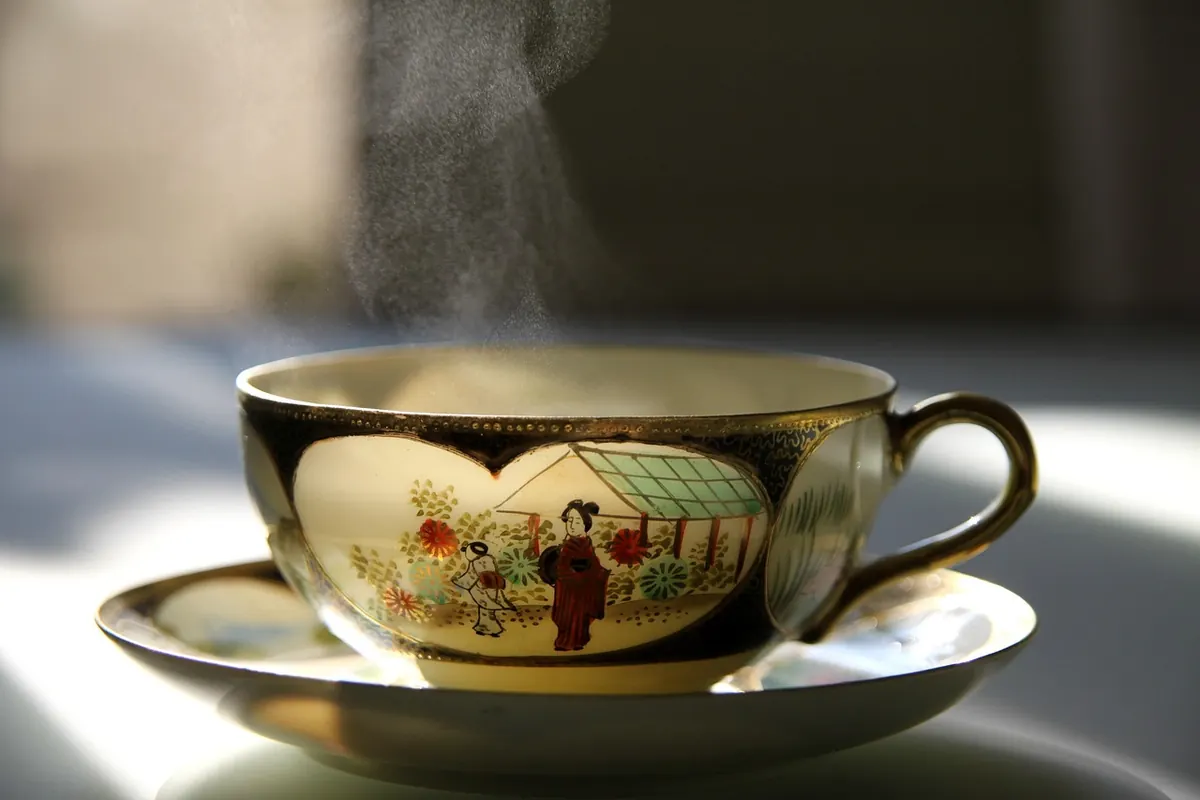
Photo: chezbeate / Pixabay